Open now · Free

The Museum of Nigerian Creativity · Est. 2026 · Lagos & online

Nothing here is behind glass.

ARCHIVE keeps the photographs, records, cloth and drawings that taught Nigeria how to look and sound like itself, and hands them back to you. Pull anything out. Turn it up. Wear it again.

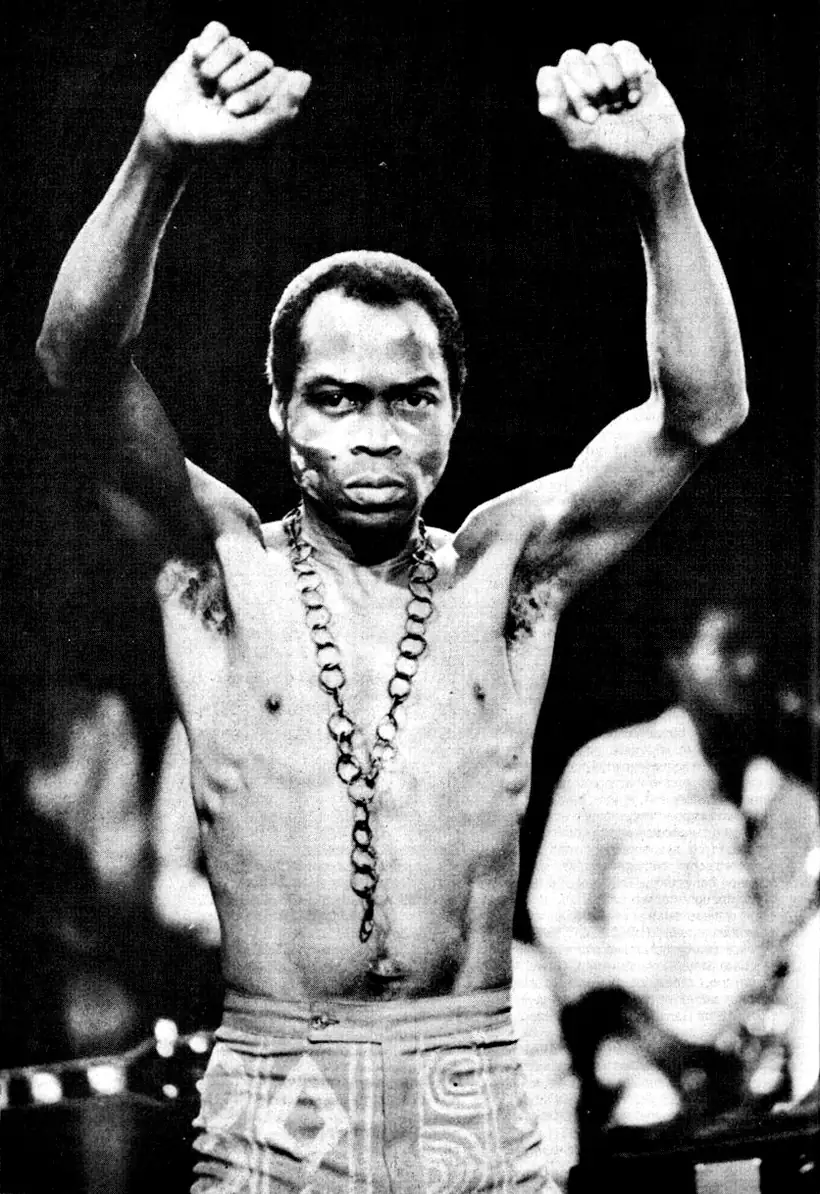
Fela Anikulapo Kuti on stage, bare-chested, both fists raised, around 1986.
MU · 1986 · 001 Fela Anikulapo Kuti Promotional photograph, 1986. Afrobeat’s architect, the year he walked out of prison and back on stage.
  • 1910s Olowe of Ise carves for kings
  • 1950 A Brownie D camera
  • 1959 A student’s flag
  • 1968 The Hairstyles series begins
  • 1976 “Zombie”
  • 1977 FESTAC
  • 1982 Juju Music
  • 1992 Living in Bondage
  • 2004 African Queen
  • 2011 Lagos Fashion Week
  • 2021 A Grammy for Twice as Tall

Four wings, one building

Every wing is a way of seeing.

Most museums file things by date. We file them by what they did to you. Pick a wing and the decades below re-tune to it.

  1. PH

    Photography

    Studio portraits, independence nights, and the hairstyles J.D. ’Okhai Ojeikere turned into sculpture.

    2,140 objects

  2. MU

    Music

    Highlife, juju, fuji, Afrobeat and Afrobeats. Five sounds, one city that would not turn the volume down.

    3,906 recordings

  3. FA

    Fashion

    Adire from Abeokuta, aso-oke from Iseyin, Maison Shade’s ready-to-tie wrappers, embellished ankara on Lagos runways.

    1,288 garments

  4. DE

    Design

    Olowe’s carved posts, Zaria’s “Natural Synthesis”, a student’s flag, FESTAC’s ivory mask, a theatre shaped like a cap.

    964 drawings & objects

The frequency

Tune the decades.

A hundred years on one band. Drag across the stations, tap a decade, or use your arrow keys.

10–40

Before the camera came home

  • DEc. 1910s–30s Olowe of Ise carves veranda posts for Yoruba palaces, figures that lean out of the wood as if they are about to step down.
  • FA1920s–30s In Abeokuta, women dyers paint cassava-starch resist onto cloth by hand. Adire eleko becomes a business, then a language.
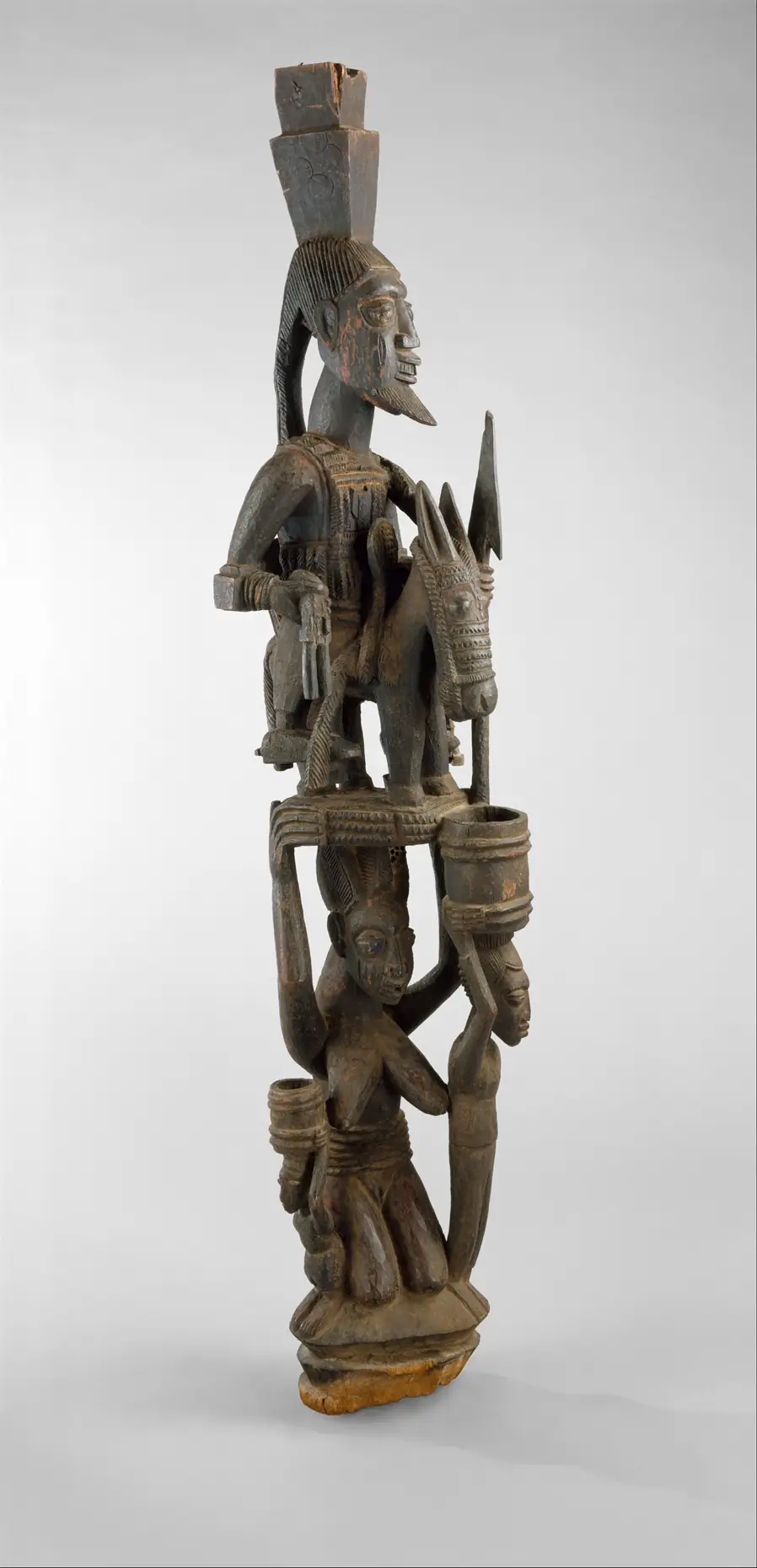
A carved wooden veranda post by Olowe of Ise: a rider on horseback above a standing woman.
DE · Olowe of Ise, veranda post, before 1938.

50s

Before the flag

  • PH1950 A young J.D. ’Okhai Ojeikere buys his first camera, a Kodak Brownie D. He will photograph Nigeria for the next sixty years.
  • MU1950s Highlife fills the dance halls of Lagos. Bobby Benson and Victor Olaiya play to rooms that dress up to listen.
  • DE1958 Students at Zaria form an art society. Uche Okeke, Demas Nwoko, Yusuf Grillo and friends decide colonial art school is not the whole story.
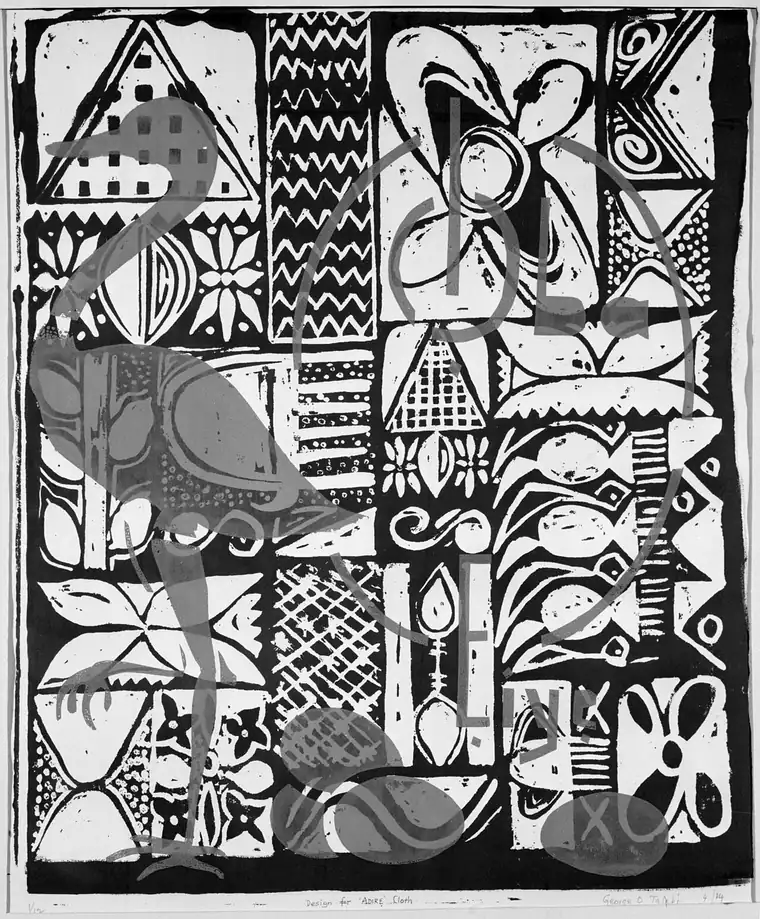
A hand-drawn design sheet for adire cloth: a grid of panels filled with circles, lines and leaf shapes.
FA · Design for adire cloth, undated.

60s

Independence, in every medium

  • DE1960 The green-white-green goes up on 1 October. It was drawn by a 23-year-old student. See Exhibit 001.
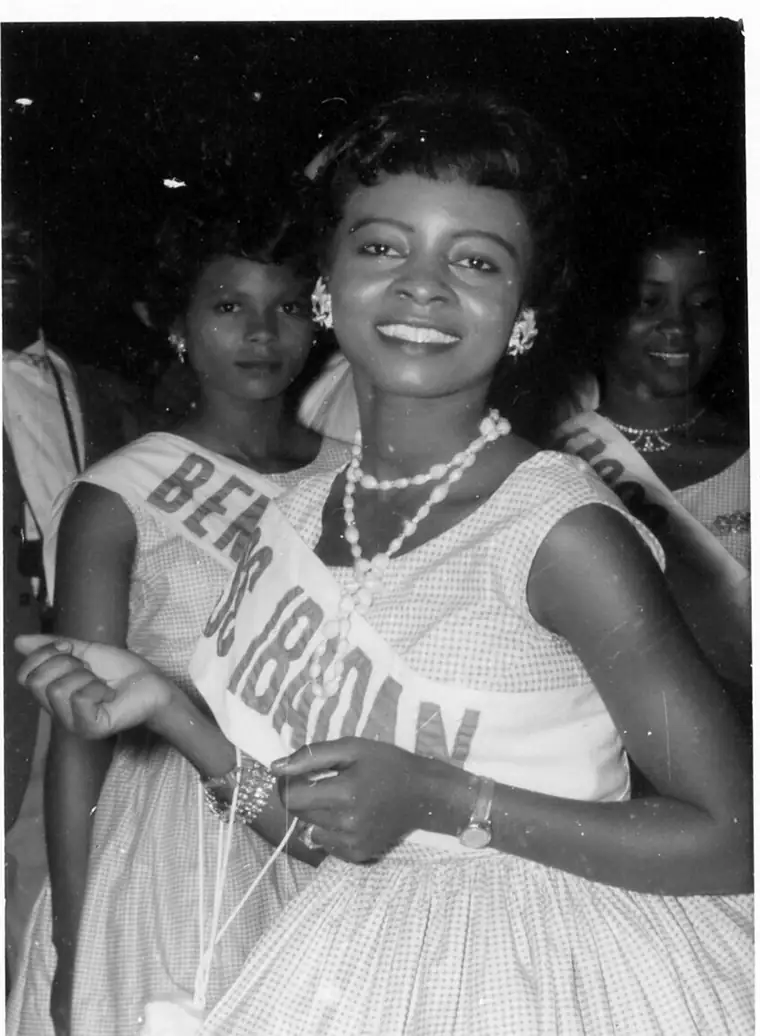
  • PH1960 Rosemary Anieze is crowned Miss Independence. The photographs of that night still look like the future.
  • FA1960s Shade Thomas-Fahm opens Maison Shade, makes the wrapper ready-to-wear and the gele ready-to-tie, and becomes Nigeria’s first modern fashion designer.
  • PH1968 Ojeikere starts the Hairstyles series: more than a thousand photographs of hair as architecture.
  • MU1969 Fela goes to Los Angeles, meets Sandra Smith and comes home with a new politics and the beginnings of Afrobeat.
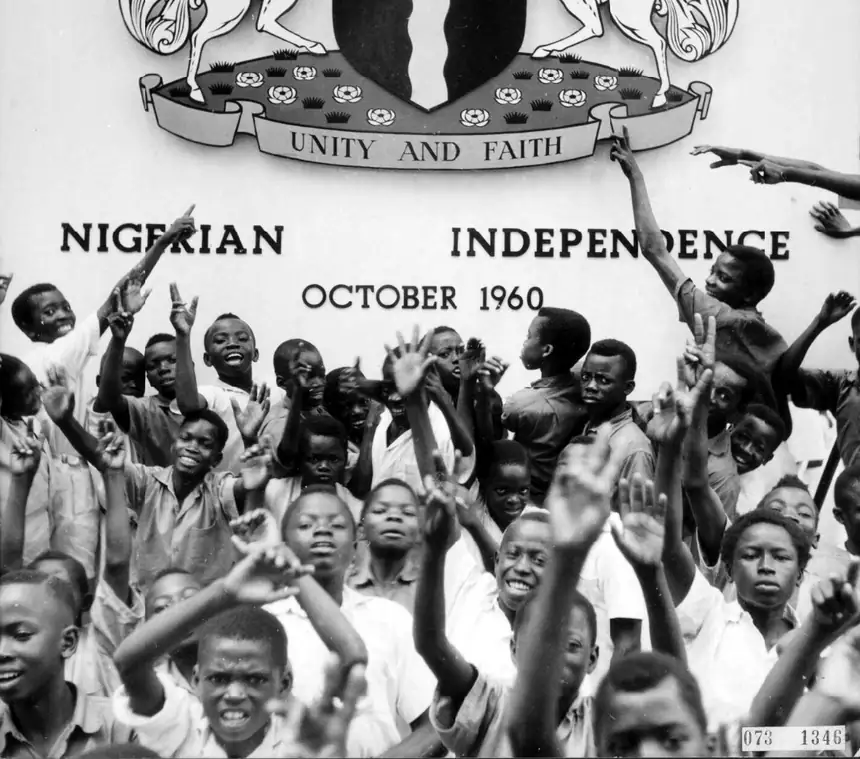
Black and white photograph of young children waving small flags at Nigeria’s independence celebration, 1960.
PH · Children celebrate independence, October 1960.

70s

The volume goes up

  • MU1970s Fela and Africa 70 turn the Afrika Shrine into the loudest room in West Africa. “Zombie” lands in 1976 and the soldiers hear it.
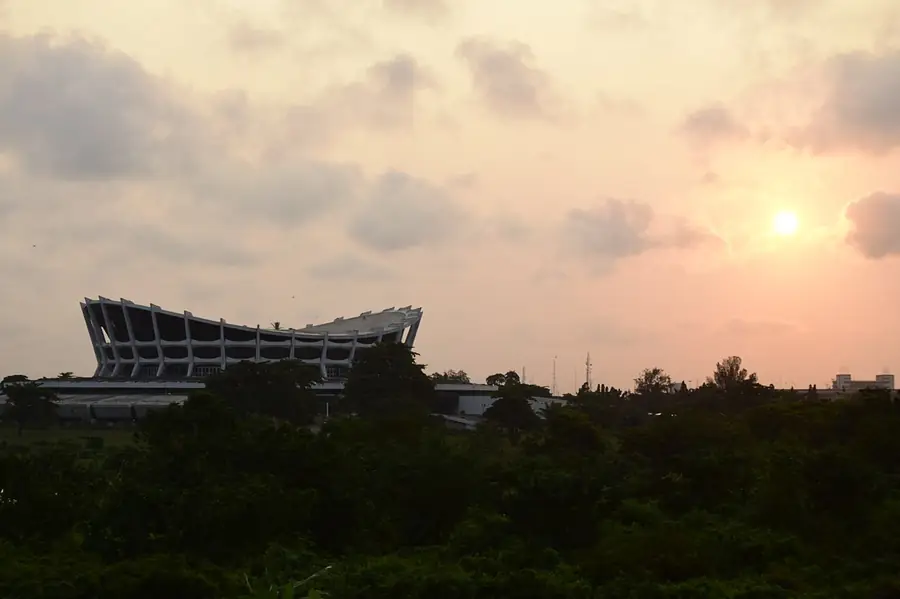
  • DE1976 The National Theatre opens in Iganmu, a building shaped like a general’s cap.
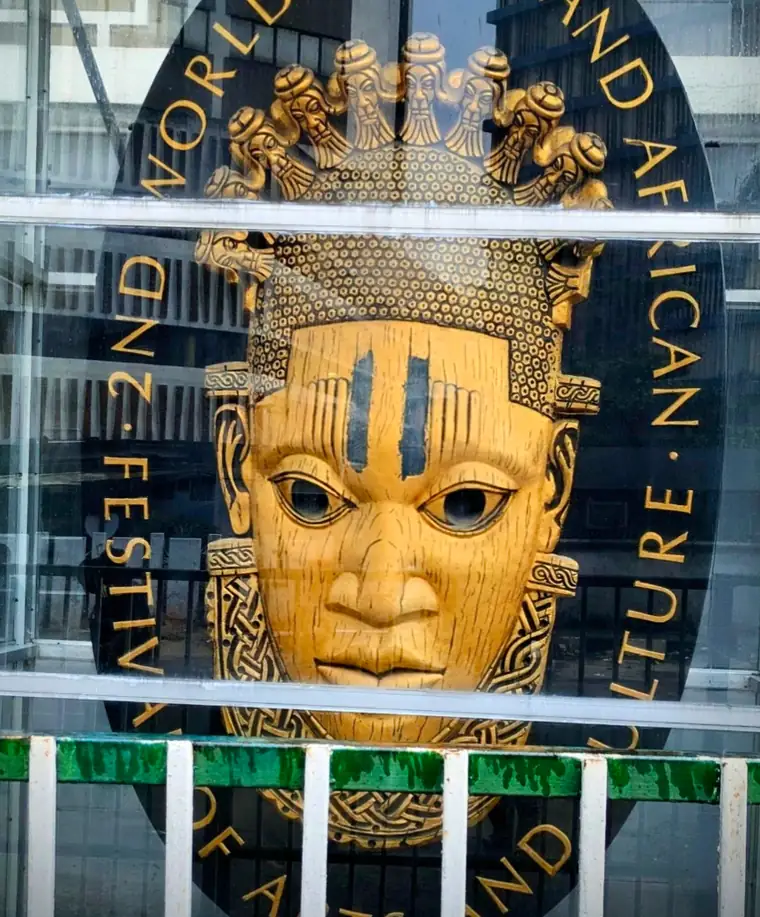
  • DE1977 Lagos hosts FESTAC ’77, a month-long festival of the Black world. Its emblem is the ivory mask of Queen Idia of Benin.
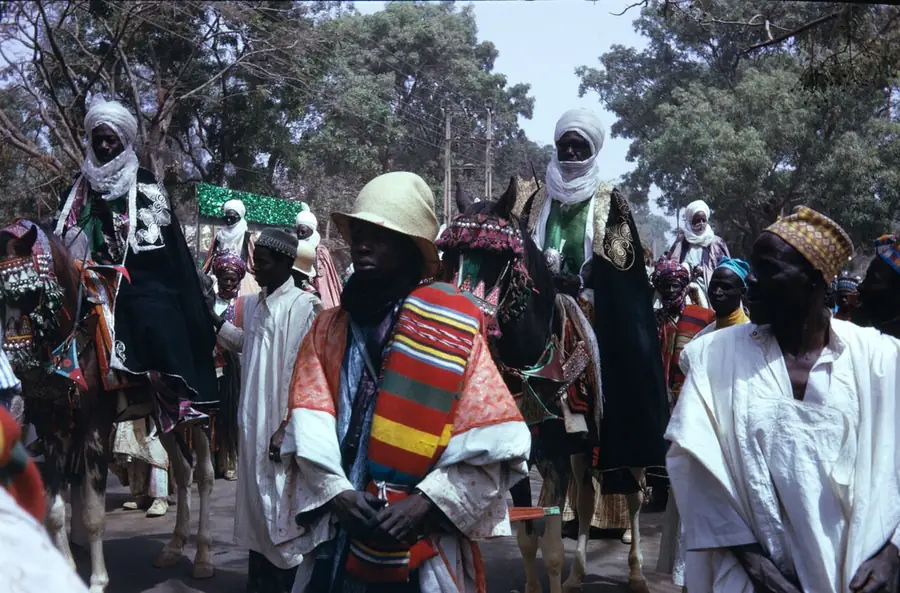
Colour photograph of horsemen in bright robes at the FESTAC ’77 Grand Durbar, a crowd behind them.
PH · The Grand Durbar, FESTAC ’77.

80s

Juju goes global

  • MU1982 King Sunny Adé releases Juju Music to the world. Talking drums and pedal steel guitar arrive in record shops from London to New York.
  • MU1986 Fela walks out of prison and back on stage. He is still not playing anybody’s game.
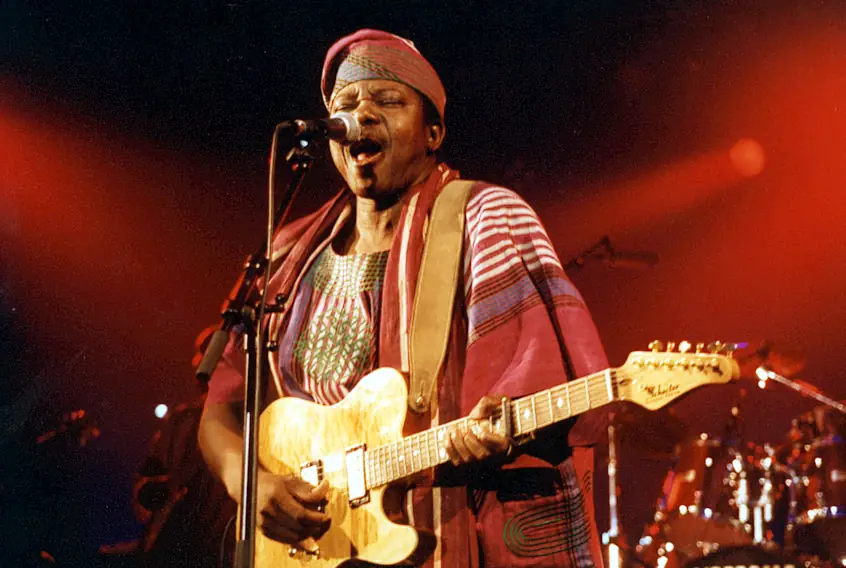
King Sunny Adé on stage in white, playing guitar and singing.
MU · King Sunny Adé on stage.

90s

Tape, VHS, farewell

  • DE1992 Living in Bondage goes straight to VHS and starts Nollywood. Hand-painted posters and loud cassette sleeves become a design school of their own.
  • MU1997 Fela is buried in Lagos. More than a million people come out to walk with him.

00s

Crossing over

  • MU2004 2Face Idibia releases “African Queen”. It plays at every wedding on the continent, and then in a Hollywood film.
  • FA2005 Lisa Folawiyo starts Jewel by Lisa and sews beads and sequins onto ankara by hand. Wax print goes to the runway.
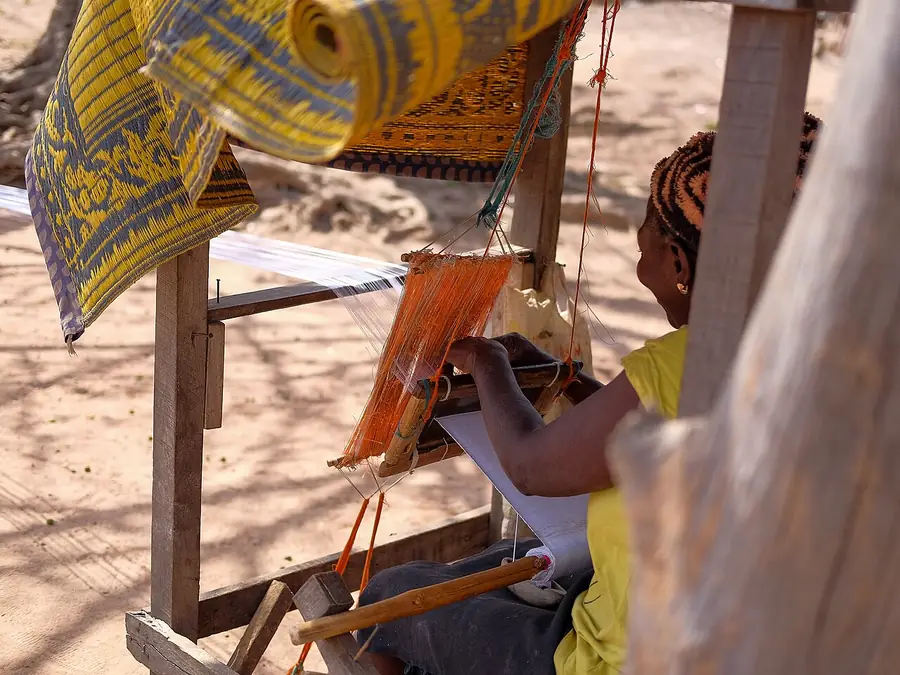
Hands working a narrow loom, weaving striped aso-oke cloth.
FA · Aso-oke on the loom.

10s

Lagos to everywhere

  • FA2011 Omoyemi Akerele founds Lagos Fashion & Design Week. The city gets a runway built to its own scale.
  • PH2010s Lakin Ogunbanwo photographs faces half-hidden by hats and veils. Studio portraiture, sixty years after Ojeikere, gets a new accent.
  • MU2015 Wizkid’s “Ojuelegba”, named after a Lagos junction, gets remixed by Drake and Skepta. A bus stop becomes a global address.

20s

Still being written

  • MU2021 Burna Boy’s Twice as Tall wins the Grammy for Best Global Music Album.
  • MU2023 Tems wins a Grammy for “Wait for U”.
  • YOUNow This decade isn’t finished. The next object in this room might be on your phone right now.

Exhibit 001 · DE · 1959 · 001

A student’s entry.

In 1959, Michael Taiwo Akinkunmi was 23, studying engineering in London, when he saw a newspaper notice: a country about to be born needed a flag.

He drew green for the land and white for peace. In the middle of the white band he put a red sun, throwing rays.

The judges kept the stripes and took the sun out. On 1 October 1960 his flag went up over Lagos, and it has never come down.

The most seen piece of Nigerian design was a competition entry from a student.

On the walls this month

Things you can’t un-see.

Five objects from the collection. They wait in grey. Look at them and the colour comes back.

Visit

Open 24 hours. Free. Bring nothing but attention.

Where
Here, on any screen. And a reading room in Lagos.
Collection
8,298 objects across four wings.
Rules
Touch everything. Share everything. Credit everyone.

Add to the archive

Your grandmother’s studio portrait. Your uncle’s highlife 45s. The aso-ebi from a wedding nobody remembers. The best archives are built by the people who kept things.

Community submissions open in 2027.